{{ tHeroTitle }}
{{ tHeroBody }}
{{ tComeFor }}
{{ tComeForSub }}
{{ tComeFor }}
{{ t_pH }}
{{ t_pSub }}
{{ t_pTrays }}
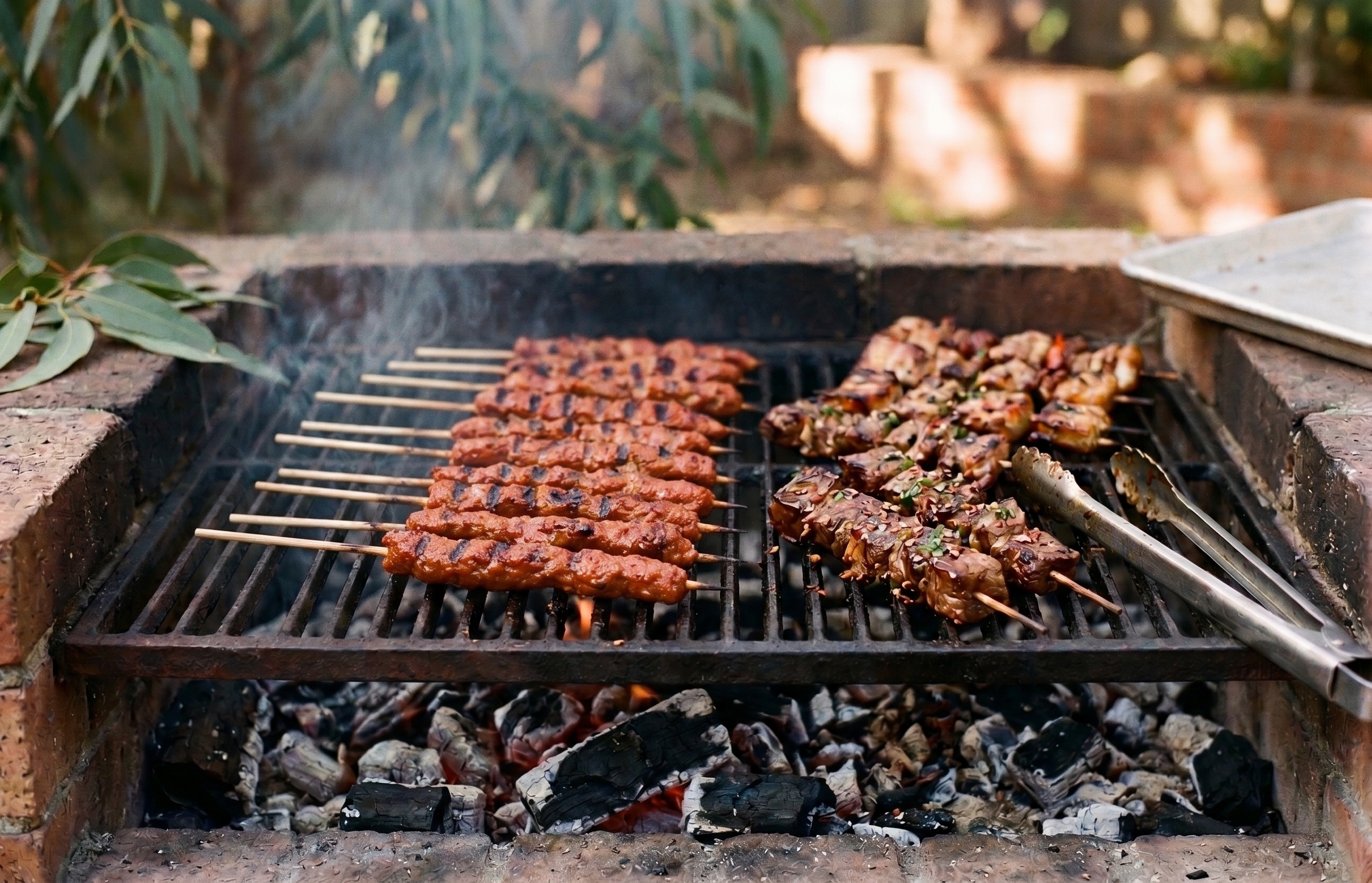
Weighted 55% chicken skewers, 25% beef, 20% pork — the split Auburn backyards have bought for thirty years.
{{ t_cH }}
{{ t_cSub }}
{{ applianceTitle }}
{{ applianceZone }}
{{ applianceWarn }}
{{ g.blurb }}
The five blocks show how sweet the marinade is: one block takes direct heat, five needs indirect only.
Marinated lines are mixed in-house, packed into sealed trays and boxes, and sold frozen. Nothing on this list is cut or weighed to order at the counter.
Keep frozen at or below −18°C. Thaw in the fridge overnight, not on the bench, and cook within 24 hours of thawing. All lines are raw and must be cooked thoroughly before eating.
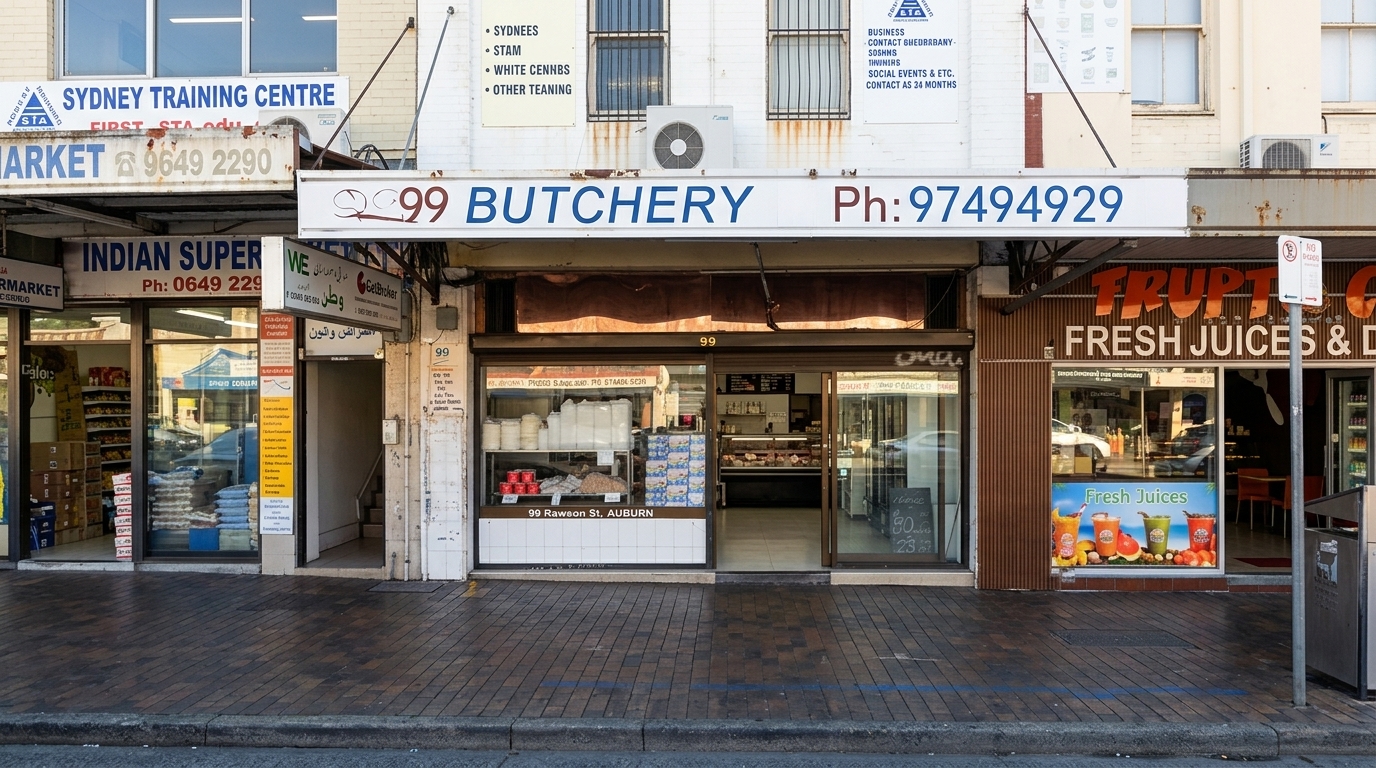
99 Rawson Street, Auburn.
Four hundred metres from Auburn station, on the western side of Rawson Street. Marinated lines are sold pre-packed in trays and boxes — call ahead for anything over five kilos.
One-hour street parking on Rawson Street, metered during trading hours.
Auburn Central parking sits 250m away — about a three minute walk with a full esky.
Saturday between 9 and 11 is the busiest hour of the week. Come before nine or after two.
Auburn NSW 2144
Australia
Bulk boxes for restaurants, clubs and caterers.
Every line on the price list is available by the box. Standing weekly orders are packed on a fixed day and held for pickup. Pricing is quoted per account — volume, frequency and cut specification all move the number.
Everything we sell starts in a tub the night before.
The cuts are ordinary. Chicken thigh, spare rib, pork neck, beef flank. What makes them worth the drive to Auburn is what happens between the cut and the counter, and that part has not changed in thirty years.
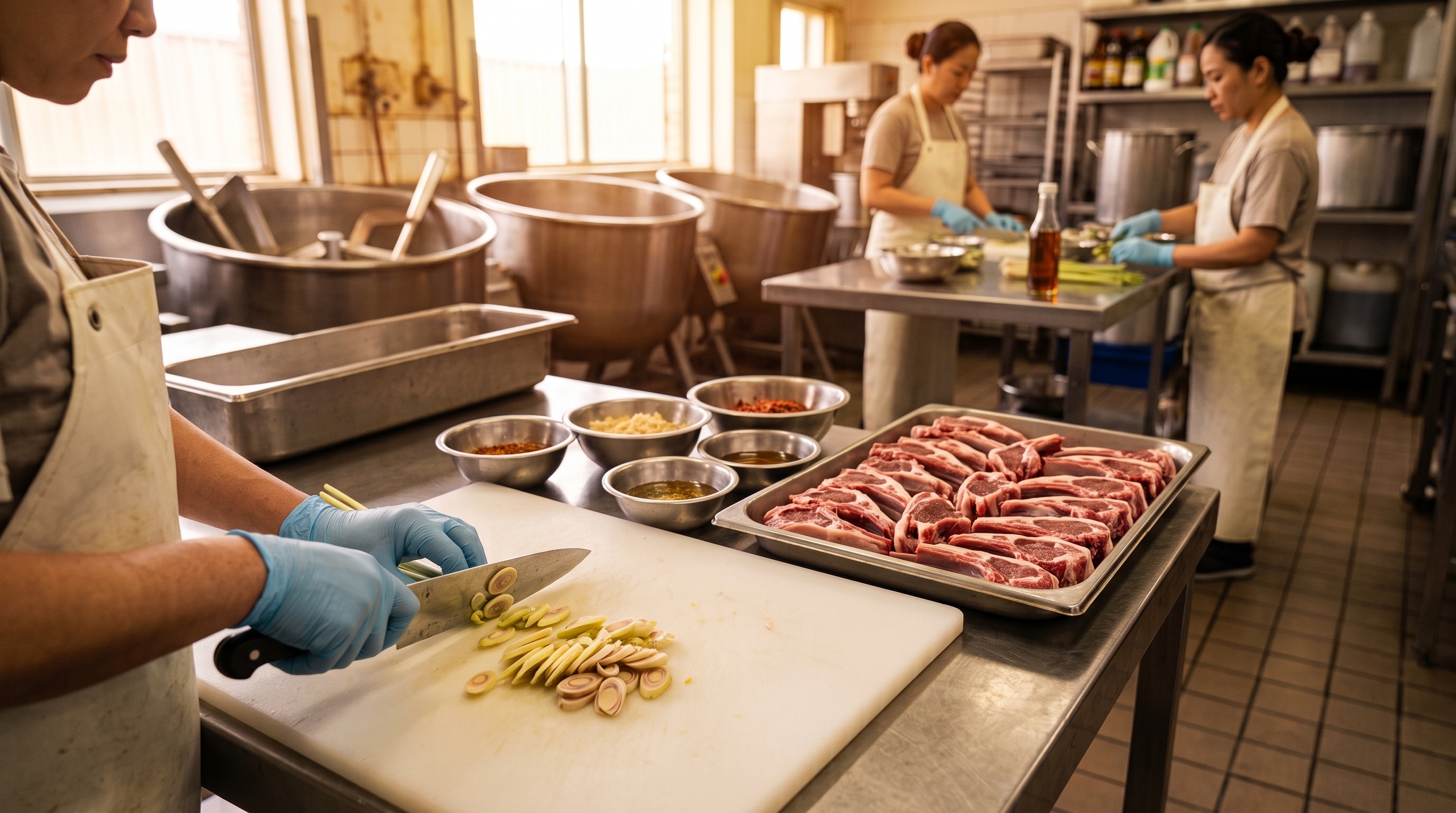
Fish sauce, sugar, garlic, shallot. Every marinade on the board is a variation on those four, and the proportions are the only thing the shop has ever kept to itself.
Lemongrass is cut the same morning it is used. It loses its top note within a day of being bruised, which is why the honey and lemongrass lines are mixed in small batches rather than made up for the week.
The codes on the price list are the oldest interface in the business. S is spicy, L is mild, X is honey and lemongrass, Y is satay, G is garlic. A regular asks for XDF and gets honey lemongrass drumstick fillet without another word spoken.
They are kept on the new site deliberately. Thirty years of shorthand is an asset, not a legacy problem to be tidied away.
A sweet marinade is harder to cook than a dry rub. Honey caramelises at a temperature well below the point at which chicken thigh is safe to eat, so a hot grill gives you a black skewer and a raw middle.
That is the whole reason the cooking guides exist, and why every pack will carry a code that opens them.
Founding year and founder's name · who mixes the marinade today · the year the shop moved to 99 Rawson Street, if it moved · one or two customer names or stories with permission to print. The copy above is written to be true without them; it gets considerably better with them.
Closed public holidays
(02) 9749 4929
Add items from the price list, or let the planner work out a party order.
{{ slipNotes }}